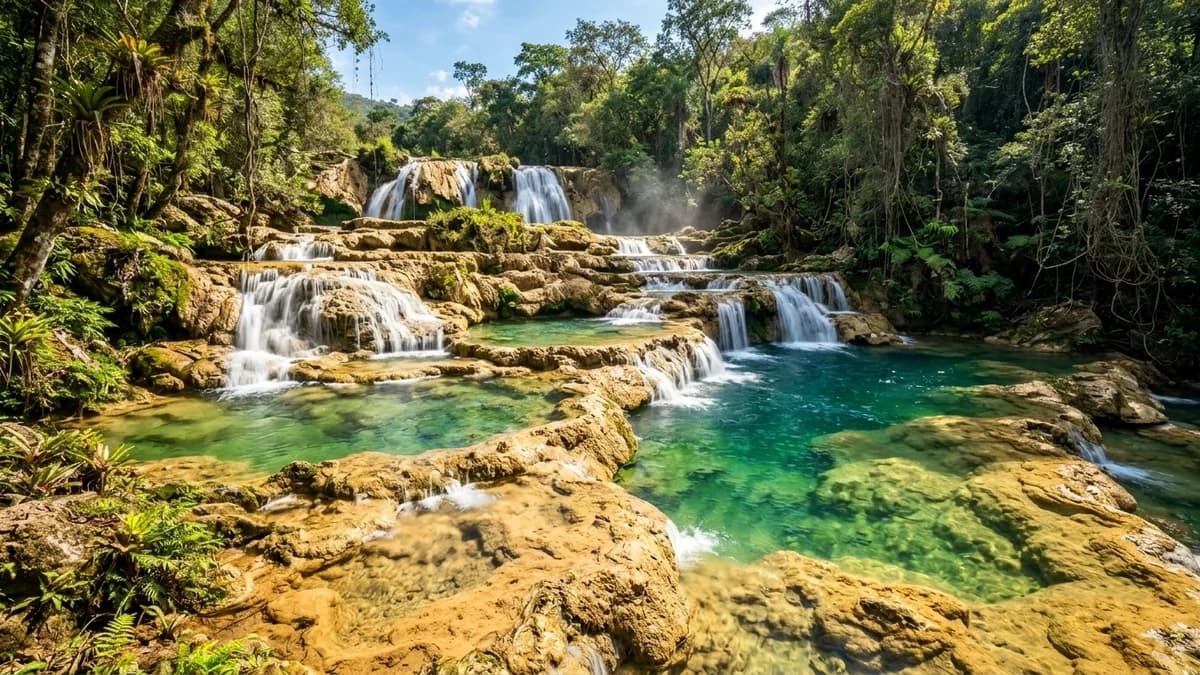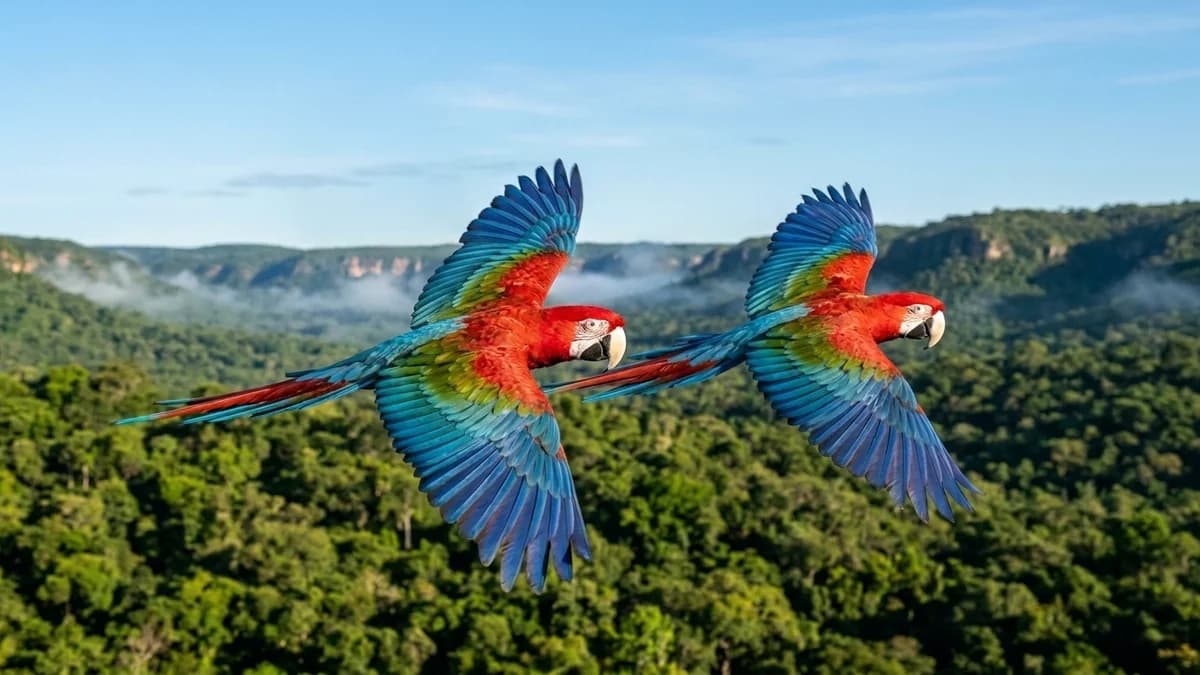
Dawn across the Serra da Bodoquena awakens one of South America's most sublime bioacoustic spectacles. As the first golden rays of spring sunlight break through the mist that settles over limestone valleys, the morning quiet of the transition forests between the Cerrado and the Atlantic Forest gives way to a breathtaking natural symphony. From the rhythmic, owl-like resonance of the Blue-crowned Motmot (Momotus momota) sheltered in the riparian canopy to the booming flight calls of Scarlet Macaw pairs (Ara chloropterus) soaring across the forest canopy in synchronized pairs, the Bonito region and Serra da Bodoquena National Park stand as one of the most revered destinations for mindful birdwatching in Brazil.
With rich ornithological diversity documented across regional Cerrado inventories and 169 bird species officially cataloged at RPPN Buraco das Araras, southwestern Mato Grosso do Sul draws ornithologists, wildlife photographers, and nature lovers from around the globe. Springtime, spanning from September through December, represents the undisputed peak season for bird observation. During this climatic shift, increased ambient humidity, vibrant flowering of native trumpet trees (ipês), and the ripening of indigenous fruits like bocaiuva and guavira trigger intense breeding behavior, territorial singing displays, and courtship flights that make sightings remarkably frequent and captivating.
Ornithological Diversity of the Cerrado-Atlantic Forest Ecotone
The unique avifauna of Bonito and the Serra da Bodoquena stems directly from its privileged biogeographical crossroads. Situated on the western margin of the Bodoquena Plateau within the Miranda River basin, the region hosts a dynamic ecotone where specialized savanna species thrive alongside seasonal deciduous forest inhabitants and wetland wanderers from the nearby Pantanal plains.
Foremost among the iconic feathered inhabitants is the Blue-crowned Motmot (Momotus momota), officially instituted as the avian symbol of Bonito under Municipal Statute 1.161/2009, celebrated in cooperation with the Bonito Municipal Government. Boasting iridescent olive-green feathers, a velvet-black facial mask bordered by striking turquoise-blue, and its unmistakable tennis-racquet-shaped central tail feathers that swing like a pendulum when perched, the motmot embodies the ecological health of preserved riverbanks. Along the forested paths bordering the Formoso, Sucuri, and Prata rivers, birders frequently encounter this peaceful predator scanning the foliage for insects and small wild fruits.
Dominating the open skies, the Toco Toucan (Ramphastos toco) impresses with its immense porous orange bill and striking black-and-white plumage. As a primary seed disperser across the Bodoquena plateau, it plays an indispensable ecological role in forest regeneration. Nearby, the flamboyant Helmeted Manakin (Antilophia galeata) displays its fiery scarlet crest within humid gallery forests, while the Bare-faced Curassow (Crax fasciolata) struts quietly across the leaf litter, gleaning fallen palm nuts.
Prime Birding Hotspots: From Sandstone Sinkholes to Crystal Springs
Navigating Bonito's birding geography requires thoughtful logistics and respect for carrying capacities. All natural excursions operate under the municipal Digital Single Voucher system overseen by the Bonito Tourism Secretariat (SECTUR), which mandates guidance by Ministry of Tourism certified naturalists (Cadastur) to guarantee environmental sustainability and minimal wildlife disturbance.
The premier birdwatching monument of the region is the Buraco das Araras, situated in neighboring Jardim (approximately 54 km from downtown Bonito along paved routes MS-178 and BR-267). This colossal collapse doline plunges roughly 100 meters deep with a circumference near 500 meters, sculpted into red sandstone cliffs overlying the regional karstic bedrock. The sheer red canyon cliffs provide safe nesting crevices for colonies of wild Scarlet Macaws (Ara chloropterus) during the spring breeding cycle. Blue-and-yellow Macaws (Ara ararauna) also frequently soar over the sinkhole, nesting primarily in hollows of tall trees and buriti palms across surrounding ranches. From wooden viewing platforms perched at the rim, observers enjoy eye-level views of macaws performing soaring maneuvers with wings fully outstretched against the emerald canopy below.
Along the crystal-clear springs and riparian forests of Rio Sucuri and Rio da Prata, the birding adventure combines aquatic and terrestrial wonder. While drifting down 22°C to 24°C calcium-rich rivers with visibility exceeding dozens of meters, birders observe Scaly-headed Parrots (Pionus maximiliani), Yellow-chevroned Parakeets (Brotogeris chiriri), and the elusive Blue-crowned Trogon (Trogon curucui). Over wetland edges, the Rufescent Tiger Heron (Tigrisoma lineatum) perches cryptically along the shaded banks, sharing territory with Green Kingfishers (Chloroceryle americana) and the fish-hunting Black-collared Hawk (Busarellus nigricollis).
Optics, Gear and Prime Hours: The Birder's Fieldcraft
Maximizing sightings and photographic sharpness requires syncing your schedule with avian biological clocks. In spring, the morning window from 05:30 to 08:30 AM is universally acknowledged as prime time. Ambient temperatures hover comfortably between 20°C and 23°C, gentle low-angled morning light illuminates feather plumage, and birds actively forage across flowering canopies. A secondary favorable window occurs in the late afternoon from 16:00 to 18:00 PM as mixed flocks return to communal roosts.
For optical equipment, 8x or 10x binoculars with a 42 mm objective lens (8x42 or 10x42) equipped with Bak-4 roof prisms and fully multi-coated optics are strongly recommended. They provide superior light transmission and wide fields of view under dense gallery forest cover. For wildlife photographers, telephoto lenses between 300 mm and 600 mm allow frame-filling shots while maintaining ethical, non-intrusive distances from active perches.
Field clothing plays a critical role in camouflage and comfort. Neutral earthy tones (olive-green, khaki, muted brown) should always be chosen over reflective whites or bright colors that trigger flight responses. Long-sleeved UPF 50+ UV-protective technical shirts provide sun defense without contaminating pristine karst spring waters with cosmetic chemicals. Sturdy closed hiking shoes, lightweight quick-dry pants, and broad-brimmed hats complete the ideal birding ensemble.
Ornithological Ethics and Risk Management (ABNT NBR ISO 21101)
Responsible birding in protected ecosystems mandates uncompromising ethical standards. Conservation guidelines from the Chico Mendes Institute for Biodiversity Conservation (ICMBio) and taxonomic classifications by the Brazilian Committee of Ornithological Records (CBRO) emphasize that animal welfare must always supersede photography. During peak spring nesting, intrusive or repeated playback recordings are strictly discouraged, as false territorial challenges deplete reproductive energy and can cause nest desertion.
Throughout Bonito's certified adventure trails, guest safety and environmental protection are governed by international standards under ABNT NBR ISO 21101 (Adventure Tourism Safety Management Systems). While absolute guarantees cannot exist in wild ecosystems, residual risk is managed through well-engineered suspended walkways, comprehensive first-aid protocols, satellite radio communications, and mandatory personal insurance tied to the official voucher.
Welcoming Hospitality at Pousada Casa Azul after Birding Trails
After an early morning expedition through the mist-shrouded canopies of the Serra da Bodoquena, birders need a restful sanctuary offering comfort, tranquility, and warm local hospitality. Centrally situated on Rua Coronel Pilad Rebuá, just steps from Praça da Liberdade in downtown Bonito, Pousada Casa Azul serves as the ideal home base for recharging batteries, sorting photographic files, and reviewing daily bird checklists.
The inn offers two tailored accommodation formats for independent travelers. For families or birding companions traveling together, the Main House provides 3 fully air-conditioned bedrooms, an airy living room, and a fully equipped private kitchen with refrigerator, stovetop, and cooking utensils—allowing early morning coffee and breakfast preparation before daybreak departures. For couples seeking secluded relaxation, the Romantic Chalet features complete privacy and a private hydromassage hot tub, perfect for soothing muscles after miles of forest hiking.
In the lush outdoor garden, mature native trees frequently host wild birds such as hummingbirds, tanagers, and euphonias right beside the swimming pool, allowing quiet birdwatching to continue during leisure hours. With high-speed Wi-Fi for backing up high-resolution RAW photo files, Pousada Casa Azul pairs serene green garden tranquility with immediate walking access to the finest regional restaurants in Bonito.
Frequently Asked Questions about Birdwatching in Bonito MS
What is the best time of year for birdwatching in Bonito and Serra da Bodoquena?
Spring (September through December) is the most rewarding season. The arrival of rains spurs flowering and fruiting across the Cerrado, driving intense mating calls, nest-building activity, and vibrant plumage displays across all biomes.
Is a specialized birding guide required for natural attractions in Bonito?
Yes. Access to registered private reserves and trails requires the municipal Digital Single Voucher with an accredited guide. For dedicated birders, hiring an ornithological specialist guarantees knowledge of bioacoustics, specific feeding trees, and discreet vantage points.
What gear should I pack for birdwatching field trips?
Pack 8x42 or 10x42 multi-coated binoculars, a lightweight waterproof rain jacket, reusable water bottle, field notebook or bird ID app (like Merlin Bird ID), camera with telephoto lens, and neutral earth-toned UV clothing. Note that conventional chemical sunscreens and insect repellents are strictly prohibited during freshwater snorkeling tours to preserve delicate aquatic vegetation and water clarity; repellents are permitted only on dry land trails and open viewing towers.
How does Pousada Casa Azul accommodate birders and nature travelers?
Pousada Casa Azul provides an oasis in downtown Bonito: peaceful accommodations near Praça da Liberdade, a 3-bedroom Main House with a full private kitchen for early departures, a Romantic Chalet with private jacuzzi, a bird-friendly tropical garden pool, and expert local logistical advice.
Official Sources and Canonical References
1. Bonito Municipal Tourism Secretariat (SECTUR): Sustainable ecotourism guidelines, Single Digital Voucher, and official municipal bird designation under Municipal Statute 1.161/2009.
2. RPPN Buraco das Araras: Ornithological inventory, bird species monitoring, and sinkhole conservation in Jardim MS.
3. Mato Grosso do Sul Tourism Foundation (Fundtur-MS): Ecotourism inventory and regional biodiversity of the Pantanal and Bodoquena.
4. Environmental Institute of Mato Grosso do Sul (IMASUL): Wildlife monitoring and watershed conservation in limestone regions.
5. Chico Mendes Institute for Biodiversity Conservation (ICMBio): Federal biodiversity guidelines and conservation management, alongside Serra da Bodoquena National Park zoning.
6. Brazilian Committee of Ornithological Records (CBRO): Official Brazilian bird taxonomic checklists and nomenclature.
7. Brazilian Association of Technical Standards (ABNT): ABNT NBR ISO 21101 Adventure Tourism Safety Management Systems.