The Power of Crystal-Clear Waters and the Wonder of Travertines in Serra da Bodoquena
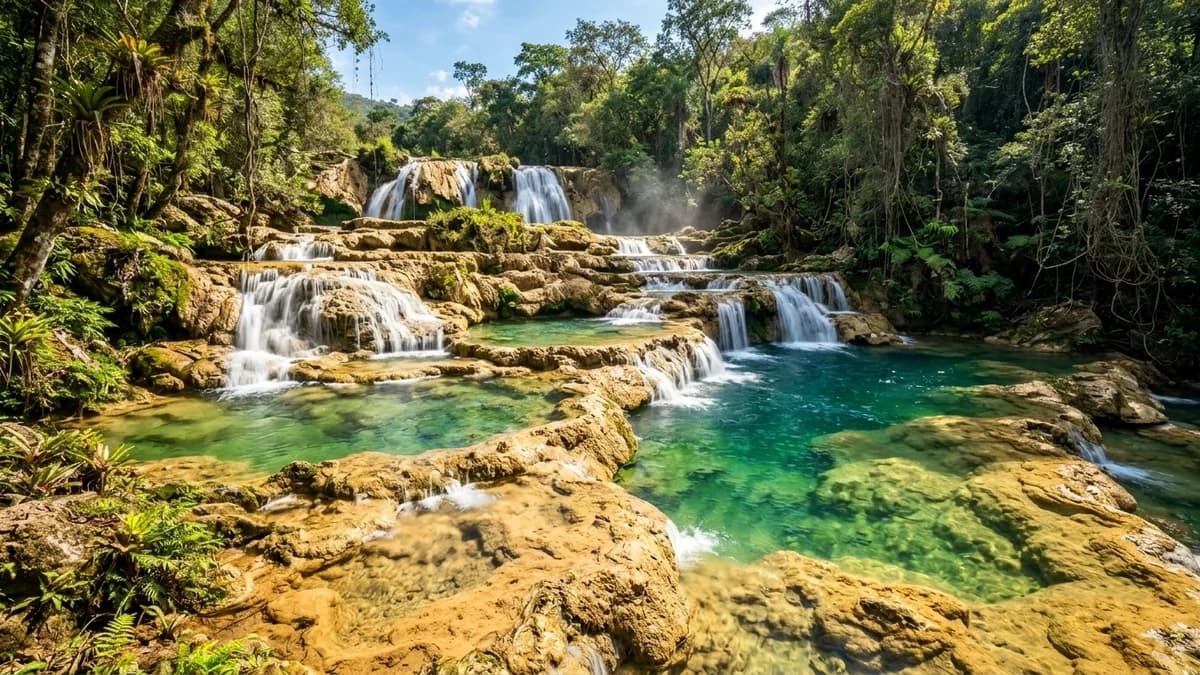
Serra da Bodoquena, nestled in southwestern Mato Grosso do Sul and neighboring the ecotourism capital of Bonito, shelters one of South America's most magnificent and pristine river ecosystems. In the spring season, when the transition from the dry spell to initial rains invigorates the vibrant green of riparian forests, regional waterfalls reach their absolute peak of ecological splendor and breathtaking aesthetics. Traversing valleys sculpted over millions of years by carbonate rock dissolution and mineral deposition, travelers witness a continuous cascade of crystalline waterfalls tumbling into stepped natural travertine pools with hues shifting from shimmering emerald green to deep aquatic turquoise.
Unlike conventional river cascades situated on granitic or basaltic terrain, where intense current mechanics continually erode rocks and cloud streams with silt, Serra da Bodoquena's hydrology behaves in an inverted, mesmerizing manner. The karst relief consists primarily of high-purity limestone from the ancient Corumbá geological group. As rainwater filters through the soil and subterranean fractures, it becomes heavily saturated with calcium bicarbonate. When re-emerging at high-volume springs at a stable 22°C to 24°C (71.6°F to 75.2°F) throughout every day of the year, water encounters lower atmospheric pressure and waterfall agitation, liberating carbon dioxide and triggering immediate calcite precipitation as solid calcium carbonate.
This hydrochemical mechanism converts organic obstacles along the Betione, Salobra, and Formoso riverbeds into living monuments of natural architecture. Fallen branches, tree leaves, and microscopic colonies of freshwater algae and bryophytes act as calcification cores, gradually enveloped by light golden and beige mineral coatings. Over centuries, iconic active calcareous tufa barriers and travertine steps develop—stone dams that hold back river waters in ascending terraces, forming limpid natural swimming pools devoid of turbidity where native fish species swim in clear sight of respectful visitors.
The Science of Calcareous Tufas: The Geological Phenomenon Building Living Waterfalls
Appreciating the natural wonder of Serra da Bodoquena requires examining the delicate interplay between geology and freshwater biology. Geologically, travertine refers to dense terrestrial limestone deposited through inorganic and biogenic precipitation of calcite from bicarbonate-rich waters. Across Bodoquena's rivers, these deposits are technically categorized as active calcareous tufas—highly porous formations interwoven with vegetal matter that continuously expand millimeter by millimeter through photosynthetic biological activity from diatom algae and aquatic mosses.
The Role of Photosynthesis and Aquatic Mosses in Limestone Precipitation
Throughout sunny spring mornings and afternoons, microscopic river plants consume dissolved carbon dioxide for photosynthesis. This biological extraction shifts the chemical equilibrium of soluble calcium bicarbonate, accelerating the deposition of solid calcium carbonate right over the moss mats and branches lining the crest of waterfalls. Documented in peer-reviewed ecological assessments by the Chico Mendes Institute for Biodiversity Conservation (ICMBio) and protected across the Serra da Bodoquena National Park, this ancient dynamic renders these cascades unique worldwide: rather than being degraded and eroded by rushing currents, the waterfall barriers constantly grow, thicken, and rebuild themselves.
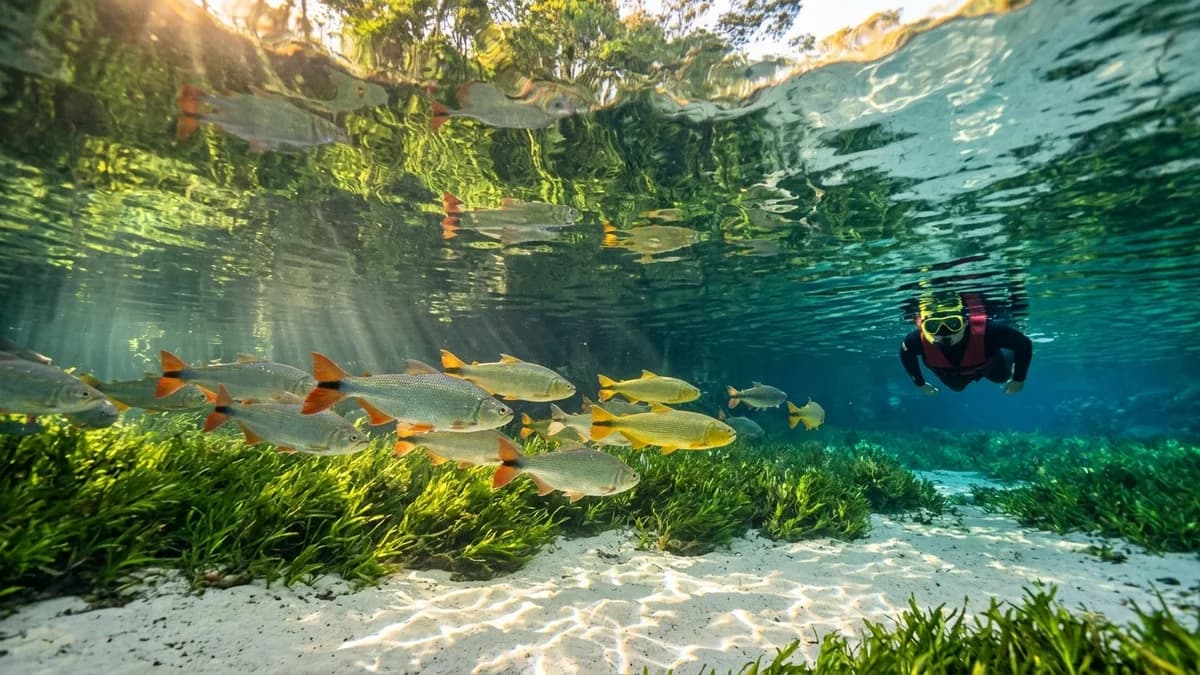
This exceptional water chemistry also explains the legendary clarity of regional travertine pools. Precipitating calcium functions as a powerful natural flocculant, binding suspended microparticles and causing them to sink directly to the rocky limestone floor. The resulting optical transparency allows sunlight to penetrate unobstructed several meters deep, illuminating river bottoms and producing the brilliant emerald shades celebrated by naturalists, botanists, and worldwide travelers.
The Spring Waterfalls and Natural Pool Circuit: A Full Sensory Immersion
Exploring Serra da Bodoquena during spring offers an unforgettable sensory awakening. Approaching the forest trails, sound introduces the landscape: gentle river murmurs crescendo into rhythmic, powerful cascades splashing across limestone steps. The surrounding atmosphere, infused with microscopic water mist from the waterfalls, delivers a refreshing coolness blending aromas of fertile soil, fresh canopy foliage, and native spring wildflowers.
Stable Karst Water Temperatures and the Emerald Visual Glow
Entering the serene travertine pools brings instant revitalization. The crystalline spring waters maintain a soothing 22°C to 24°C, offering immediate relief from the warm mid-day sun of Mato Grosso do Sul's interior plateau. Underfoot, the porous limestone rock provides solid mechanical traction unlike slippery mud found in silted waterways. Swimming against gentle currents or floating upon submerged calcite ledges reveals a lucid aquatic habitat where schools of native piraputangas with crimson fins and golden dorado drift effortlessly through the underwater terraces.
The visual experience reaches maximum brilliance between 10:00 AM and 2:00 PM when vertical sunrays pierce the dense canopy of ancient native trees. Beams of light appear tangible as they strike the pure water column, projecting shimmering dancing reflections onto the golden limestone floor and illuminating tiny oxygen bubbles clinging to subaquatic mosses. Each turn of the trail presents a pristine vantage point: bridal-veil cascades, deep swimming holes ideal for relaxation, and gentle natural hydromassage showers carved by mineral-rich flows.
Riparian Forest Biodiversity: Wildlife Sanctuary of the Cerrado and Atlantic Forest
Beyond its hydrogeological majesty, Serra da Bodoquena forms one of Brazil's most vital biodiversity transition corridors, where Cerrado savannas meet the interior Semideciduous Seasonal Forest connected to the Atlantic Forest domain. The lush riparian forests flanking the waterfalls serve as indispensable wildlife corridors for endangered species, as documented by technical surveys from the Mato Grosso do Sul Environmental Institute (IMASUL) and the Mato Grosso do Sul Tourism Foundation (Fundtur-MS).
Strolling quietly along elevated wooden walkways and packed-earth forest trails, visitors frequently encounter curious troops of capuchin monkeys (Sapajus cay) swinging among colossal fig trees and ancient tree ferns. Along calm riverbanks, fresh footprints of South American tapirs (Tapirus terrestris)—the continent's largest terrestrial mammal—reveal that local waterways provide daily hydration and cooling baths. Coatis forage through forest leaves, while playful river otters perform swift aquatic maneuvers before slipping into limestone crevices.
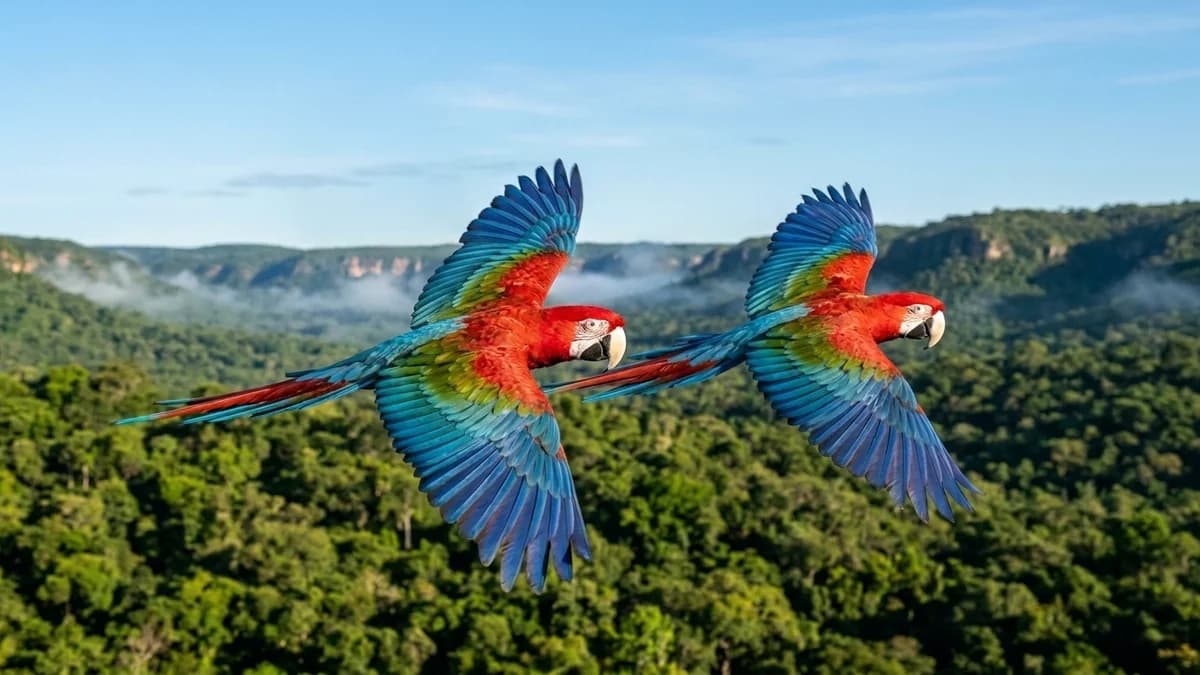
High in the canopy, birdlife flourishes extraordinarily. Pairs of Hyacinth Macaws (Anodorhynchus hyacinthinus) and Red-and-green Macaws (Ara chloropterus) soar in tandem above forested ravines, their bold colors striking against lush foliage. Toco Toucans (Ramphastos toco), Bare-faced Curassows (Crax fasciolata), and the iconic Blue-crowned Motmot (Momotus momota) inhabit shaded branches, offering ecotourists and birdwatchers remarkable wildlife observation amidst blooming epiphytic orchids and bromeliads.
Expert Practical Advice: Essential Tips for Safe and Comfortable Waterfall Exploration
To maximize comfort and safety during your expedition across Serra da Bodoquena's waterfalls and travertine terraces, local expert recommendations prove invaluable. Proper footwear is essential: flexible rubber-soled neoprene water shoes are indispensable for stability. While calcareous tufa offers superior mechanical grip compared to common river rocks, walking barefoot can cause discomfort on sharp calcite crystal nodules, while standard flip-flops easily float away or slip on damp clay paths.
Essential Gear: Neoprene Water Shoes and UV50+ Sun Protection
Regarding environmental protection, the cardinal rule of karst waters must be rigorously respected: chemical sunscreens and conventional insect repellents are strictly prohibited immediately prior to entering natural pools and riverways. Cosmetic oils and synthetic chemicals form surface films that suffocate delicate mosses and diatoms essential for tufa growth and disrupt fish gill respiration. Recommended best practice requires wearing long-sleeved UV50+ certified swim shirts and broad-brimmed hats, reserving repellent sprays solely for clothing and dry land segments.
Timing and logistics also benefit from careful preparation. The premier photographic and swimming window spans 10:00 AM to 2:00 PM, when overhead sunlight enlivens deep emerald water hues. In terms of transit, waterfall attractions span between Bonito's local circuits (such as Rio Formoso and Rio Mimoso falls about 17 km to 35 km from downtown) and larger reserves in the municipality of Bodoquena (such as Rio Betione and Salobra Canyon about 60 km to 75 km away), connected by scenic paved highways and maintained gravel roads. Setting out early in the morning following a peaceful night's rest ensures an unhurried, fulfilling full-day experience.
Operating under the ABNT NBR ISO 21101 technical safety standard (Adventure Tourism Safety Management Systems), all waterfall circuits adhere to daily visitor caps and accompaniment by accredited ecotourism guides, safeguarding guest welfare and the perennial conservation of regional river basins.
A Sanctuary of Serenity and Hospitality: Where to Rest at Pousada Casa Azul
Following an active day hiking forest trails, traversing limestone steps, and swimming in pristine spring waters, quiet and restorative accommodation becomes the paramount desire of discerning travelers. In Bonito, Pousada Casa Azul provides the ideal peaceful environment to recharge in an intimate, homelike setting.
Private Accommodations: The Main House and Romantic Chalet with Private Jacuzzi
For families or traveling groups valuing complete privacy and generous living space, the property's Main House (Casa Principal) is the premier choice. Featuring three spacious, air-conditioned bedrooms accommodating families and travel groups of up to 6 guests, it includes a fully equipped private kitchen with full appliances, complete cookware, and ample countertops. Guests enjoy the luxury of preparing favorite meals at sunset, savoring the comforting rhythm of a private countryside home surrounded by lush gardens.
For couples seeking intimate romance and deep physical relaxation after exploring the waterfalls, the Romantic Chalet (Chalé Romântico) offers an exceptional sanctuary. This exclusive chalet features a private indoor jacuzzi hot tub, comfortable double bed, gentle ambient lighting, dedicated dining space, and soothing views looking out toward tropical gardens. Soaking in the warm jacuzzi water in the tranquility of Bonito's evening provides the ultimate conclusion to a day of nature exploration.
Conveniently situated within Bonito's peaceful urban perimeter, Pousada Casa Azul ensures prompt access to regional restaurants, pharmacies, and tour agencies while preserving absolute quietude for a restful sleep. Guests benefit from secure private parking, high-speed Wi-Fi, and personalized local hospitality providing insider tips on routes and schedules to enjoy Serra da Bodoquena's waterfalls with effortless peace of mind.
Official Sources and Technical References Consulted
1. Municipality of Bonito / SECTUR: Official data regarding regional ecotourism attractions and environmental territorial planning.
2. Serra da Bodoquena National Park / SECTUR: Environmental characteristics, calcareous tufa geology, hydrography, and biodiversity of the karst plateau.
3. Mato Grosso do Sul Tourism Foundation (Fundtur-MS): Ecotourism inventory and biodiversity documentation for the Pantanal and Serra da Bodoquena.
4. Mato Grosso do Sul Environmental Institute (IMASUL): Water resources monitoring, karst basin preservation, and riparian forest conservation across Mato Grosso do Sul.
5. Chico Mendes Institute for Biodiversity Conservation (ICMBio): National biodiversity conservation guidelines and management plans for federal protected areas in the Cerrado biome.
6. Brazilian Association of Technical Standards (ABNT): ABNT NBR ISO 21101 standard (Adventure Tourism Safety Management Systems — Requirements).
7. Pousada Casa Azul: Official hospitality information, 3-bedroom private Main House and Romantic Chalet with private hot tub in Bonito/MS.